
Humidity has a funny way of sneaking into your home—one minute everything feels normal, and the next you’re wondering why your walls are sweating and your hair has given up on life.
Sure, a dehumidifier can fix a lot of that, but what if you don’t own one, don’t want the noise, or simply refuse to buy another appliance that needs filter changes?
The good news is you don’t need a bulky machine to reclaim comfort.
With a few clever tricks (most of which cost next to nothing), you can pull moisture out of the air, freshen up your rooms, and stop mold and musty smells before they settle in.
Here are surprisingly easy, science-backed ways to dehumidify your home—no dehumidifier required.
Dehumidifying a House without a Dehumidifier
An excess of moisture in the air promotes the growth of mildew and mold, which can damage the structure of your home.
The best way to dehumidify your home is to find the source which is creating the humidity and eliminate or reduce it if possible.
For this, most of us plan to use a dehumidifier as a quick solution. However, do remember that running a dehumidifier in every room can jack up your electricity bill.
This is why you may need to find the source of the humidity and use simple, less expensive alternative methods to reduce the amount of moisture in the air.
What follows are thirteen simple, inexpensive methods for keeping the humidity down in your home without actually using a dehumidifier.
1- Open a Window
If the air outside is drier than the air inside, one of the simplest fixes is to promote airflow by leaving internal doors and windows open.
These methods are especially effective in moisture-heavy areas like bathrooms and kitchens, where everyday activities naturally generate more water vapor.
A quick check with a humidity meter will tell you whether the outdoor air has lower moisture levels. When it does, letting that air in can dramatically reduce indoor humidity without using any appliances.
Even during colder months, it’s important not to seal your home completely. Heavy insulation, blocked vents, and tightly shut windows keep the heat in—but they can also trap stale, moisture-laden air.
Without proper ventilation, this trapped humidity has nowhere to go. The result is that the condensation forms on windows, doors, and other cool surfaces, eventually leading to mildew and mold growth.
To prevent this, aim to crack open your windows or doors a few times each week, even in winter, just long enough to let fresh air circulate and push damp air out.
2- Window Fan
The easiest way to reduce the amount of water vapor in the air is to make it move. Proper ventilation reduces water vapor and helps to dry out the air.
This can be as simple as using a window fan to bring in the outside air. Be sure to get one with an exhaust setting so it can remove the humid air from your home.
But if it is too hot or cold outside to use a window fan, then running a regular fan in a room will at least move the air around while reducing the water vapor that is present.
Placing a standalone fan in individual rooms helps break up pockets of stagnant, humid air and spreads it more evenly throughout the space. This prevents moisture from settling in corners or near walls and helps your rooms feel fresher and less muggy overall.
3- Heat to Dry
You may not want to open a window or run a fan during the cold winter months. In that case, you’ll want to dry the air by heating it.
Use a space heat or wood stove to dry the air as a gas stove will have the opposite effect.
Place the heater or stove in a room that has excessive humidity, but be sure not to allow the temperature of the room to exceed 95 degrees Fahrenheit. Otherwise, the walls, floors, and ceiling might be subject to steam damage as a result.
You can improve the effectiveness of the space heater or wood stove by running a fan, as this will circulate the dryer air to a better effect.
But be aware that you should use a fan (not the heater) for larger rooms and areas such as the basement or garage, as using the heater there will not be very effective.
4- Calcium Chloride Absorption
If moving the air is not an option, you can absorb the moisture by placing desiccant containers in the room.
Desiccant is calcium chloride that can pull the moisture from the air. You can use ordinary table salt, rice, and silica gel. But if you want to speed up the process, cheap to buy moisture absorbers works very well.
Start with one desiccant container per room and judge the results. Most of these provide long-lasting moisture absorption, versatile & convenient to use in small to medium enclosed spaces (including damp corners) such as wardrobes, bathrooms, car interiors, basements, and kitchens.
The best part is you can reuse these desiccants simply by drying them in a warm, well-ventilated spot to drive out the trapped moisture, then placing them back in humid areas.
They’re low-effort way to control excess moisture and help keep mold growth in check without the need to install a dehumidifier in your room.
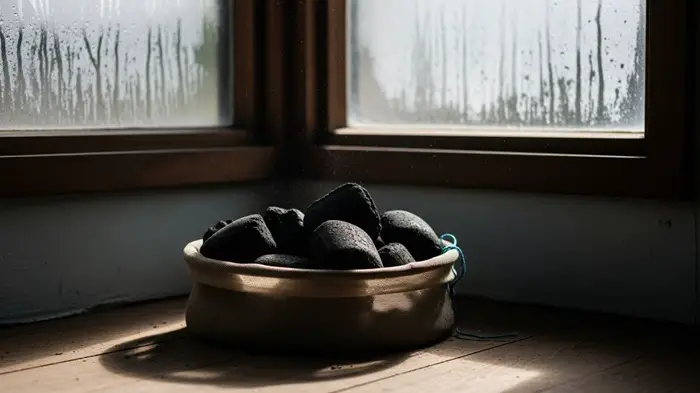
5- Use a Basket of Charcoal
This is one you may not have heard about. Studies have proven the excellent absorption qualities of charcoal.
Its porous structure gives it a large surface area, allowing it to trap humidity much like a natural, low-cost dehumidifier.
To use it, simply place a handful of charcoal briquettes or activated charcoal in a breathable basket and set it in a corner of the room.
Over time, the charcoal will slowly pull excess moisture from the air and help restore a more comfortable balance indoors.
Even better, a single batch can stay effective for two to three months, making this one of the most economical humidity-reducing hacks you can use—especially during sticky summer weather or in naturally damp spaces.
6- Hang Your Clothes Outside
Building on this, you’ll want to make sure to dry your clothes outside. A dryer can heat your house up like an old-fashioned oven, but hang-drying your clothes inside can be just as bad.
That’s because the excess water in the clothes will collect in the air and add unnecessary moisture to your house. This can make your home extremely humid and uncomfortable.
For this reason, you’ll want to be sure to dry your clothes outside. By drying your clothes outside, you can keep the moisture where it’s supposed to be while giving your clothes the quality dry they need.
Do this simple trick to give your house the humidity reduction you’ve been looking for.
7- Dry Any Excess Water
You may be surprised by how much excess water exists in your house.
We like to think of our homes as warm and dry places, but the truth of the matter is that there’s often much more water lying around the house than we may realize.
Think about it this way: you’ve just finished washing the dishes, and now you’re ready to relax. You don’t realize that you’ve left small amounts of water in the kitchen sink and on the countertops.
The bathroom sink, as well, is dotted with water, as is your bathtub. And if you leave the water on the floor or shower area after bathing, all this excess water can contribute to heightened moisture and humidity in your house.
For this reason, you’ll want to ensure that you keep your surfaces dry and that you keep water use to a minimum. Doing so will allow you to make your home less humid and more pleasant, no matter how humid it is where you live.
8- Clean Your Rugs Regularly
Did you know that your rugs retain moisture?
If you find that your home is too humid, it may be because your rugs are getting too moist. For this reason, consider having your rugs dry cleaned or even replacing them altogether.
This will help you keep your home feeling suitable, no matter how humid it gets outside.
Remember that the same can be said for all your upholstery, so be sure to clean your sheets, covers, and couch cushions, as well. Doing so will give you an easy way to reduce humidity in your home.
9- Remove Plants
We get it—your plants take your home décor to the next level.
Despite this, they release large amounts of excess water that make your home more humid than it needs to be.
Think about it this way: you water your plants at least every other day, but where does that water go?
When plants take in carbon dioxide from the surrounding environment, they release that water into the air. This means that rooms with plants become moister and more humid than other rooms in your house. This can be a problem if you’ve got plants in your living room or bedroom.
What this means for you is that you should invest in outdoor plants if you wish to reduce the humidity in your home.
In this way, you’ll be able to boost the aesthetic value of your home without having to suffer from unnecessarily large amounts of humidity.
10- Clean Your Gutters
Nobody enjoys climbing a ladder, scooping out soggy leaves, and wrestling with debris—but gutter cleaning is one of those chores you simply can’t ignore. When gutters clog, rainwater has nowhere to go.
Instead of flowing safely away from your home, it can back up under shingles, spill over the sides, or pool around the foundation. That’s one of the most common—and most preventable—causes of indoor water leaks.
And once water sneaks inside, it doesn’t stay quiet. Leaks in your attic, walls, garage, or basement inevitably raise the moisture content of the air. Higher indoor humidity means stickier rooms, musty smells, and the perfect breeding environment for mold and mildew.
Knowing this, it’s worth making gutter maintenance part of your regular home-care routine.
A quick seasonal cleanout can save you from moisture problems that make your home uncomfortable—and from repair bills that are far more painful than an hour spent clearing the gutters.
11- Turn on the Air Conditioner
This one might sound obvious, but it deserves a reminder. Running your air conditioner on for even a few hours a day can make a noticeable difference in lowering indoor humidity.
AC units aren’t just cooling machines—they’re also highly effective dehumidifiers.
Of course, keeping the system running nonstop will show up on your energy bill, but using it strategically during the hottest, muggiest parts of the day can bring instant relief.
As the AC operates, it pulls warm, moisture-laden air out of your home, condenses that moisture into liquid (which then drains away), and circulates cooler, drier air back into your rooms.
In short: when heat and humidity become overwhelming, your air conditioner is one of the quickest and most efficient tools to restore comfort.
12. Vapor Barrier
A vapor barrier is a protective layer—usually made from polyethylene plastic sheeting or specialized moisture-resistant membranes—installed behind walls, under floors, or above ceilings. Its primary job is simple but crucial: stop moisture from migrating into your living space.
Moisture naturally moves from areas of high concentration to areas of low concentration. If the air outside is more humid than the air inside (a common situation in summer), that moisture will try to move through your walls and insulation toward the drier interior.
Without a vapor barrier, your home essentially acts like a sponge, slowly drawing in moisture.
A vapor barrier interrupts this movement by creating a physical, non-porous shield. It blocks water vapor from entering through building materials, prevents condensation inside wall cavities, and helps keep insulation dry and effective.
Dry insulation means better temperature control and far fewer opportunities for mold, wood rot, and structural damage.
In short, installing a vapor barrier doesn’t dehumidify your home, but it prevents new moisture from infiltrating—which is half the battle in maintaining a stable, comfortable indoor environment.
13- Baking Soda
Baking soda isn’t just for cleaning and deodorizing—it can also help dehumidify a room by naturally absorbing moisture from the air.
- Start by pouring baking soda into small bowls, open boxes, or any shallow containers you have on hand.
- Place these containers in the dampest areas of the room—near windows, inside closets, or anywhere humidity tends to linger.
- If you’re worried about spills, you can loosely cover the container with a thin, breathable cloth so air can still move through.
- Over time, the baking soda will begin to harden as it absorbs moisture. When it turns completely clumpy or solid, it has reached saturation and should be replaced.
Baking soda is a helpful supplement, but it’s not a replacement for a dedicated dehumidifier.
It’s only effective in small, confined areas with mild to moderate dampness. In larger rooms and spaces with heavy moisture—like basements, garages, or laundry rooms—it won’t keep up with the humidity levels.
In those cases, mechanical ventilation or a real dehumidifier is usually necessary.

Why is Humidity High in Summers Than in Winters?
One primary reason why humidity gets higher in summer at certain places is the high temperature.
It’s a fact that warmer air can hold more moisture than colder air. Hence, it is the high temperature that makes all the difference to the air and its moisture content.
For this reason, it’s essential to know what steps you can take to fight off this humidity and make your home cool and refreshing, no matter how swampy it gets outside.
You’ll find that the damp rooms in your house (bathroom, kitchen, and basement, for example) will always tend to have a higher humidity reading. This means that you may have to do more to get the humidity levels down in these rooms.
Cold air in winters (even when completely saturated) contains far less water/moisture than warmer air in summers.
Studies showed that air at higher temperatures (above 20°C) could contain up to 10 times more moisture content than air at 0°C. And for this reason, you feel stickier in summer.
Besides the obvious signs (moist air, excessive sweating, and a stuffier atmosphere), you can check the humidity levels by getting an accurate reading on a hygrometer.
So, what’s a good hygrometer rating?
Science reveals that the most comfortable levels come between the range of 30 to 50, with the ideal humidity level resting at 45. Anything below this range is too dry, while anything 50 and above is excessively humid.
If your hygrometer reveals a reading of 50 or above, you’ll know it’s time to try out the helpful tips contained in this guide.
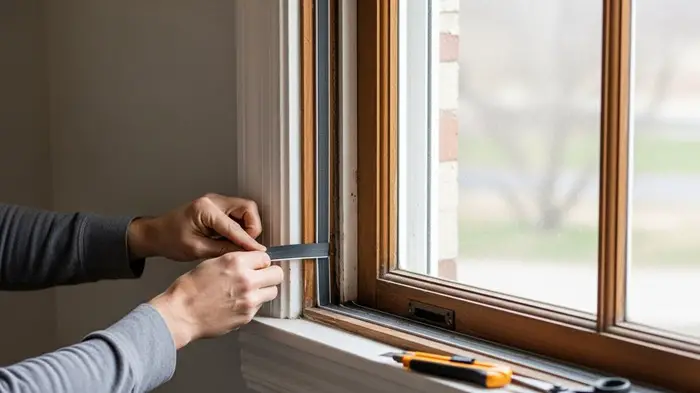
Will Installing Weatherstripping Dehumidify My Room in Summer?
Installing weatherstripping won’t dehumidify a room by itself, because it doesn’t pull moisture out of the air.
What it does do is prevent humid outdoor air from leaking inside, which means your room won’t keep collecting new moisture throughout the day.
Here’s how it helps in summer:
- Blocks warm, humid outdoor air from seeping in through gaps around windows and doors.
- Helps your AC or other cooling systems work more efficiently, so they remove indoor humidity faster.
- Reduces condensation issues by keeping indoor temperatures more stable.
- Prevents moisture infiltration during sudden temperature swings or rainstorms.
Think of weatherstripping as reducing the sources of humidity, not removing the humidity that’s already there.

Can You Use Cat Litter as a Dehumidifier in Home — and How Does it Work?
If you share your home with a cat, you probably have a hefty stash of cat litter on hand.
What many pet owners don’t realize is that certain types—especially clay- or silica-based litter—are excellent at absorbing moisture. That makes them surprisingly effective DIY dehumidifiers.
The simplest method is to set out a bowl of fresh cat litter in the room that feels damp. Over time, the granules pull moisture from the air, helping lower humidity levels without any fuss.
You can also get a bit more creative and make your own moisture-absorbing bags.
Fill small breathable bags (mesh, cotton, or even perforated plastic) halfway with cat litter, seal them, and place them in areas prone to dampness—closets, shoe cabinets, under sinks, or storage rooms.
Using cat litter quietly soaks up excess humidity and can be swapped out when they feels saturated. This inexpensive solution is especially useful when you can’t pinpoint the exact source of the moisture.
It won’t replace a mechanical dehumidifier in very wet environments, but it’s a handy, low-cost option for naturally drying out small spaces and reducing overall humidity in your home.
Related FAQs
What plants help to absorb moisture indoors?
If you want to dehumidify your living areas, bedroom, or bathroom the natural way, try adding plants like Peace Lily, Boston Fern, English Ivy, Areca Palm, and Spider Plant.
These varieties pull moisture from the air through their leaves while also filtering pollutants.
They work best in mildly damp rooms—not extremely humid ones—and add a refreshing, calming touch to your space. Just remember that plants also need proper airflow and light to stay effective.
What’s the best way to dehumidify a kitchen without a dehumidifier?
The best way to dehumidify a kitchen without a dehumidifier is to control moisture at its source. For example, covering the pots while cooking traps steam before it escapes into the room, reducing immediate humidity spikes.
Using the exhaust fan, opening windows for cross-ventilation, and wiping down damp surfaces also help keep moisture levels in check.
These methods won’t dramatically change overall indoor humidity, but they do prevent the quick buildup of steam that often makes kitchens feel warm, muggy, and uncomfortable.
How to dehumidify a basement without windows and without using a dehumidifier?
If your basement has no windows and you don’t want to use a dehumidifier, your best option is to use oscillating or box fans to keep air moving.
Point fans toward stairways or open doorways to push damp air upward into better-ventilated parts of the house.
Additionally, uninsulated pipes sweat in humid basements. Wrapping them with foam insulation prevents condensation that adds extra moisture to the room.
Also, you should avoid cardboard boxes and clutter, which trap moisture. Use plastic bins and keep them off the floor.
The Bottom Line
Getting rid of intense humidity doesn’t have to be complicated—even in the summertime.
By following the information in this guide, you’ll be able to reduce the amount of humidity in your home without a dehumidifier.
All the tips in this piece have been tested and give you the chance to indeed have your home feeling better.
So don’t wait! If you find your home too humid, go out and try any combination of these tips today.
We know this for sure: if done correctly, these tips will have your home feeling more livable in no time!

Meen Smith is a nurse by profession who loves writing online, spending time with her family and caring for the elderly. She has already worked as an associate editor on various moms, babies, home appliances, kitchen, and healthy living blogs. In her spare time, she also enjoys drawing, reading/writing kindle eBooks and improving her skills a bit.