

Moisture is sneaky. It sneaks into drywall, lounges inside basements, fogs up windows, and hangs in closet corners like an uninvited guest.
So, we plug in dehumidifiers to quietly pull water right out of the air we breathe.
And then one day, you look at that bucket full of freshly collected water and think: “Huh. This looks clean. Could I drink it?”
If you’ve ever had this thought, you’re not alone.
In fact, the “Is dehumidifier water drinkable?” debate is surprisingly popular among homeowners, hikers, preppers, and curiosity-driven science lovers. After all, the water looks clean, feels soft, and comes from the air itself.
But here’s the twist: looks can deceive, and that crystal-clear puddle in your dehumidifier tank is hiding more than you think.
This article breaks down what dehumidifier water really is, why it isn’t safe to drink, what happens if you accidentally take a gulp, whether you can filter it into drinkable water, and practical ways you can use it safely.
Let’s get into the science, the safety, and a little humor—because moisture management is more fun when you understand it.
Understanding the Dehumidifier Water
Before we judge whether you should drink that tankful of water, it’s important to understand where it comes from and what a dehumidifier actually does.
A typical home dehumidifier works on a very simple refrigeration principle:
- Warm, humid air is sucked into the machine.
- This air hits a set of cold evaporator coils.
- Moisture in the air condenses on these coils—exactly like water droplets on a cold soda can.
- The liquid drips down into a collection tank or drainage pipe.
- The dried, warmer air is released back into the room.
The entire system is closed-loop and mechanical. There’s no purification, no filtration, no sterilization, and no intention of making drinking water.
Once the water condenses:
- It flows through small channels designed for drainage, not hygiene.
- It ends up in a plastic tank—often one that’s dark, damp, unsterilized, and prone to biofilm growth.
- The tank may sit for hours or days, providing a warm, ideal environment for microorganisms.
It’s basically the opposite of what you’d want for potable water.
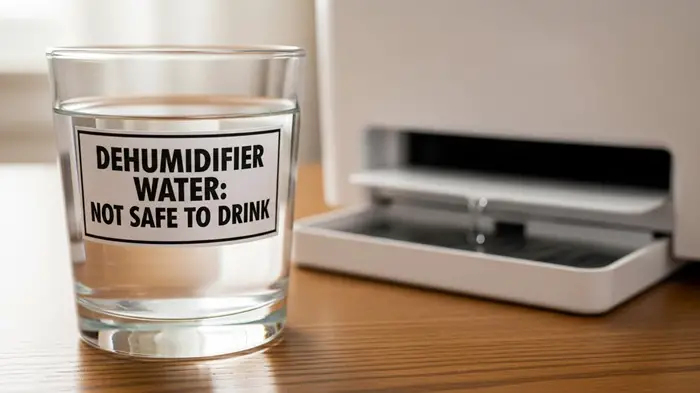
Why Water from a Dehumidifier is Not Safe to Drink?
Now that we know how dehumidifier water forms, let’s uncover what’s actually in it.
Dehumidifier water is essentially distilled water, only in theory. Yes—it is condensed from vapor, similar to the early stage of distillation, which is why some people assume it’s pure.
But there’s a catch: the air in your home isn’t pure, and neither is your machine.
As water condenses and drips from the coils, it picks up metals, dust particles, mold spores, bacteria, HVAC contaminants, volatile organic compounds (VOCs), traces of cleaning chemicals, and microplastics from the tank itself.
Think of it as “distilled water that took a long walk through a dirty factory.”
Here’s a clear breakdown of what typically ends up inside that dehumidifier reservoir.
| Contaminant | Source | Potential Risk |
|---|---|---|
| Bacteria & Biofilm | Stagnant dehumidifier tank, moist surfaces | Gastrointestinal illness |
| Mold & Spores | Air intake, coils, tank | Allergic reactions, respiratory irritation |
| Heavy Metals (Copper, Aluminum, Nickel) | Internal coils and components | Neurological risks when ingested long-term |
| VOCs | Household cleaners, paints, furniture off-gassing | Toxicity, headaches, nausea |
| Microplastics | Worn tank plastics | Unknown long-term effects |
| Dust & Particles | Household air | General contamination |
| Microbial Metabolites | Biofilm growth | Disease-causing potential |
Even the best dehumidifiers—including dehumidifiers that produce drinking water (specialized atmospheric water generators)—use multi-stage filtration, UV treatment, carbon filters, and mineral rebalancing.
A regular household dehumidifier unit does none of that.
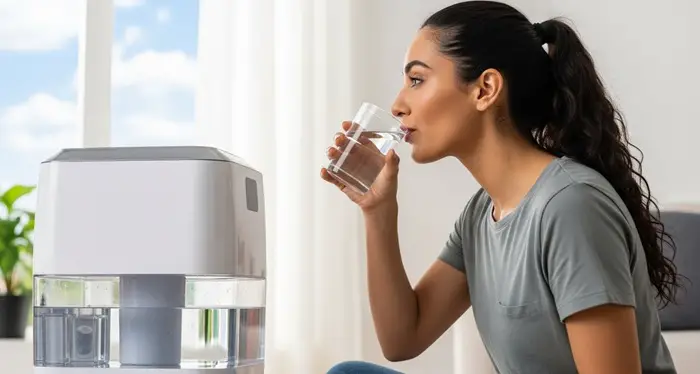
What Will Happen if You Drink the Water from a Dehumidifier by Accident?
Let’s say you accidentally took a sip while emptying the dehumidifier water tank or during a curious moment. What now?
Well, you’ll probably be fine — but it’s not recommended.
Accidental consumption is rarely catastrophic if it’s a one-time incident. Your stomach acid is incredibly strong.
But there are possible health risks if you plan to consume unfiltered dehumidifier water daily:
- Upset stomach or mild gastrointestinal issues – this includes nausea, cramps, or diarrhea—most common if bacteria or mold are present.
- Exposure to heavy metals – while one sip won’t harm you, long-term consumption can affect neurological and kidney health.
- Possible allergic reactions – mold sensitivity can cause throat irritation, coughing, or sinus issues.
- VOCs and chemical contaminants – these may cause irritation, headaches, or mild toxicity depending on concentration.
Unless your goal was to reenact a survival movie scene, you’re better off avoiding the second sip.
Can You Filter and Drink the Collected Water from a Dehumidifier Tank at Home?
Here’s the big question: can you make this dehumidifier water safe and drinkable?
Technically, yes — with enough filtration, purification, and treatment — but realistically, NO, not in a simple or economical way.
Most people who attempt this end up spending more than the cost of clean bottled water.
Here’s why home filtration usually isn’t enough for purifying the water from your dehumidifier unit:
Typical home filters like Brita pitchers, basic carbon filters, or countertop sediment filters…are NOT designed to remove bacteria, heavy metals, mold toxins, industrial residues from coils, microbial byproducts, or VOCs.
Even boiling the water doesn’t fix heavy metals or VOCs.
Filtration Technologies Required to Make Dehumidifier Water Potable
If you really wanted to turn it into safe water, you’d need a multi-stage system similar to what a very few smart dehumidifiers that make drinkable water use:
- Sediment filtration – Removes dirt and particulates
- Activated carbon filtration – Removes odors, VOCs, and chemicals
- Reverse Osmosis (RO) – Removes dissolved solids and metals
- UV Sterilization – Kills bacteria, mold, and viruses
- Mineral Rebalancing – Prevents soft-water leaching issues in the body
- Final-stage microfiltration – Ensures purification before consumption
And even then, the water still may not meet potable standards if your dehumidifier tank harbors persistent biofilm.
Special Note: Drinking “Distilled Water” from a Dehumidifier
Some people wonder: “How old to drink distilled water from a dehumidifier system?”
The answer is simple: age doesn’t matter — because it’s not truly distilled water and never becomes safe, no matter who drinks it.
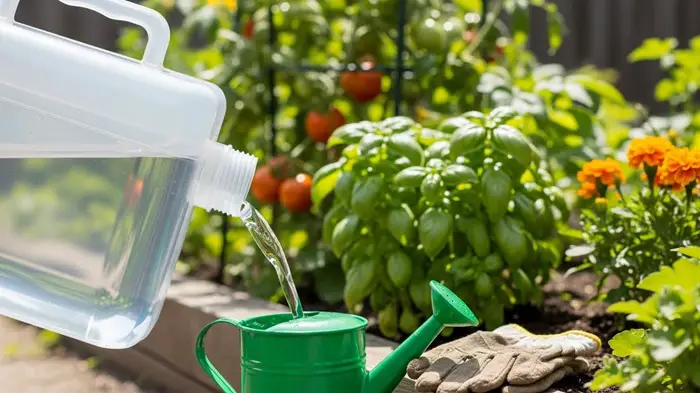
Where Can You Use Dehumidifier Water? Practical Non-Drinking Uses and Applications
Just because you shouldn’t drink the water from a dehumidifier system doesn’t mean it has to go to waste.
Here’s where the water from your basement dehumidifier or from your small bathroom unit shines and can be used safely.
1. Cleaning & household tasks – You can safely use it for mopping floors, cleaning windows, washing outdoor furniture, and car washing. And the best part is that it prevents water spots due to low mineral content.
2. Ironing clothes – The low mineral content actually prevents scale buildup in steam irons. It’s an ideal use.
3. Watering Plants – With some caution, water directly from the dehumidifier tank is safe for gardening and non-edible plants only. You should avoid using it for herbs, vegetables, or fruit plants in your grow room.
4. Filling car batteries, radiators, or coolant mixes – the low mineral content of dehumidifier water is also great for lead-acid batteries, radiator reservoirs, and windshield wiper fluid (mixed with cleaner).
5. Emergency situations – Not ideal, but in extreme emergencies (where boiling is possible), you can also use it after filtering or using a chemical purification method. Still not the best option, but better than dehydration.
Final Thoughts
A dehumidifier is a brilliant machine—quietly battling humidity, preventing mold, and keeping indoor air comfortable. But while it collects a tank full of clean-looking water, that water is not safe to drink, not by accident, not by optimism, and not even by basic home filtration.
If you want water that’s truly clean and safe for drinking, stick with treated tap water, bottled water, or actual atmospheric water generators designed for human consumption.
But don’t toss out that tank of water either—put it to great use around your home, in your garden, and for your tools and appliances.

Meen Smith is a nurse by profession who loves writing online, spending time with her family and caring for the elderly. She has already worked as an associate editor on various moms, babies, home appliances, kitchen, and healthy living blogs. In her spare time, she also enjoys drawing, reading/writing kindle eBooks and improving her skills a bit.