
If you’ve ever walked into a room cooled by a high-efficiency heat pump, you’ve probably noticed that the air “feels” lighter, fresher, and far less sticky.
It’s not your imagination—it’s physics.
Modern heat pumps are brilliant multitaskers. They can warm your home in winter and cool it in summer, but here’s the twist: many homeowners don’t fully understand: your heat pump system also serves as a dehumidifier—at least to some extent.
But the real question is: Does it work well enough to replace a dedicated dehumidifier? And if so, how do you use it effectively without sabotaging comfort or energy efficiency?
In this ultimate, practical, slightly nerdy guide, we’ll break down how heat pumps operate, how they pull moisture out of the air, where their limits lie, and whether a heat pump and dehumidifier combo is actually worth considering.
Let’s dive in.
Understanding Heat Pumps
A heat pump is one of the most versatile HVAC systems ever invented. At its core, a heat pump works by moving heat rather than creating it.
Using refrigerant lines, a compressor, coils, and expansion components, it transfers thermal energy between indoor and outdoor environments.
In cooling mode, it functions almost exactly like an air conditioner—absorbing indoor heat through the evaporator coil and releasing it outside through the condenser coil.
In heating mode, it uses a reversing valve to flip that entire process, pulling warmth from outside air—even cold air contains heat energy—and delivering it indoors.
Its purpose is simple: maximize comfort with the least amount of energy possible. Heat pumps shine in mild to moderate climates where efficiency, sustainability, and consistent temperature control matter.
They regulate both temperature and humidity by cooling the air past its dew point, causing moisture to condense on the evaporator coil.
That’s why some HVAC experts say a “dehumidifier works on a heat pump principle” applies here—the physics overlap.
But while a heat pump does remove moisture as part of its natural cooling process, that doesn’t always make it a perfect or complete substitute for an actual dehumidifier.
And that’s where things get interesting.
Can You Use a Heat Pump as a Dehumidifier?
Yes—but with conditions. Heat pumps can act as dehumidifiers because the cooling cycle naturally extracts moisture from indoor air.
When warm, humid air passes over the cold evaporator coil, water vapor condenses into liquid and drains away. This is the same mechanism found in standard AC units.
However, the catch is this:
A heat pump dehumidifies only when it’s actively cooling, and even then, its primary target is temperature—not humidity. That means two things:
- If your home is humid but not warm, the heat pump may not run long enough to remove much moisture.
- If the unit is oversized, it cools the air so quickly that it doesn’t stay on long enough to dehumidify effectively.
In other words, a heat pump can remove moisture, but it’s rarely as aggressive, intentional, or consistent as a dedicated dehumidifier.
Still, with correct settings and conditions, it can help maintain thermal comfort by reducing that muggy, sticky air feeling.
Benefits of Using Heat Pumps as Dehumidifiers
If you’re trying to understand why some people swear by their heat pump’s ability to dry the air, here’s the good news: there are some genuine advantages.
1. Energy savings
Heat pumps are naturally energy-efficient because they transfer heat instead of generating it. When used for mild dehumidification, they consume far less electricity than many portable dehumidifiers.
2. Fewer appliances to maintain
Using one system to handle cooling and moisture removal simplifies life. No extra water tanks to empty, no additional filters, no extra maintenance tasks.
3. Automated humidity control (in some models)
Many ductless mini-splits include “Dry Mode,” a setting designed to extend coil contact time and improve moisture removal. It’s not a full dehumidifier, but it does a surprisingly good job.
4. Improved indoor air quality
By reducing humidity, heat pumps help slow the growth of mold, mildew, and dust mites—common indoor allergens.
5. Enhanced comfort without overcooling
Some heat pump units can remove moisture without drastically lowering the room temperature. This keeps you comfortable without turning your house into an Arctic exhibit.
6. Seamless integration with home HVAC
Unlike standalone dehumidifiers that treat only one room, a whole-home heat pump can improve moisture levels across multiple spaces.
7. Quiet operation
Most heat pumps—especially ductless systems—are whisper-quiet compared to portable dehumidifiers that sound like miniature jet engines.
Limitations of Using Heat Pumps for Dehumidification
Of course, no system is perfect. Here’s where heat pumps fall short when used as full-time dehumidifiers.
1. Only works during cooling cycles
A heat pump must cool the air for moisture removal. If the temperature is already comfortable, the system may barely run, resulting in little to no dehumidification.
2. Not as effective in extreme humidity
In tropical or coastal environments, baseline humidity levels are often too high for a heat pump alone. Dedicated units pull significantly more water per hour.
3. Oversized systems dehumidify poorly
If your heat pump is too large for your home, it cools the space rapidly and shuts off before enough moisture is removed. Short cycling = poor humidity control.
4. Dry mode isn’t a true dehumidifier
Dry Mode slows down fan speed and allows the coil to extract more moisture, but it’s still limited compared to a full-capacity dehumidifying unit.
5. Can affect energy efficiency
Running a heat pump just for dehumidification—especially when it’s already cool indoors—can lead to unnecessary power usage.
Although heat pumps are very energy efficient, they are far less efficient than running a standalone dehumidifier for the same effect, as it can slightly increase electricity bills.
Heat Pump vs Dehumidifier – Which Is Better for Moisture Control?
| Feature | Heat Pump | Dedicated Dehumidifier |
|---|---|---|
| Primary Function | Heating & cooling | Removing moisture |
| Moisture Removal Efficiency | Moderate | High |
| Energy Usage | Low–moderate | Moderate–high |
| Noise Level | Very quiet | Noticeable (especially portable units) |
| Coverage Area | Multi-room or whole-home | Usually 1 room |
| Best Use Case | Mild humidity control | High humidity, basements, coastal climates |
| Cost | Higher upfront | Lower upfront |
How to Use Your Ductless Heat Pump as a Dehumidifier Unit?
If you want to squeeze the most moisture-removing performance out of your heat pump, follow these practical, homeowner-friendly steps:
1. Activate “Dry Mode” (if available)
Dry Mode prioritizes moisture removal over temperature changes. It lowers fan speed, increases coil contact time, and cycles the compressor differently.
2. Use a Slightly Lower Temperature Setting
If the room is humid but not warm, lowering the thermostat by just 1–2°F can trigger a cooling cycle long enough to remove moisture without making the room uncomfortably cold.
3. Ensure Proper Airflow
Make sure filters aren’t clogged, and indoor/outdoor units are unobstructed. Good airflow improves coil efficiency and speeds up condensation.
4. Keep the Fan on “Auto”
Avoid using constant fan mode, which can blow moisture back into the room before it fully drains away.
5. Run the Unit Longer During Humid Hours
Late afternoon and evening humidity spikes are common. Running your heat pump during these periods can significantly improve results.
6. Address Drainage Issues
Standing water in condensate pans or blocked drain lines reduces dehumidification and may create bacterial growth. Clean them at least twice per year.
7. Use a Hygrometer
A humidity gauge lets you monitor indoor moisture. Ideal indoor relative humidity is 40–55%. Anything above 60% encourages mold growth.
Related FAQs to Heat Pump and Dehumidifier
Where is my heat pump located?
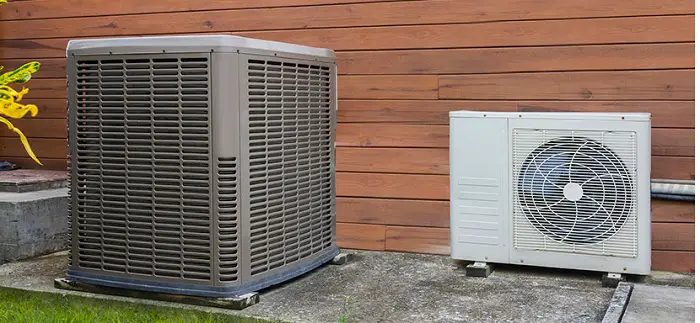
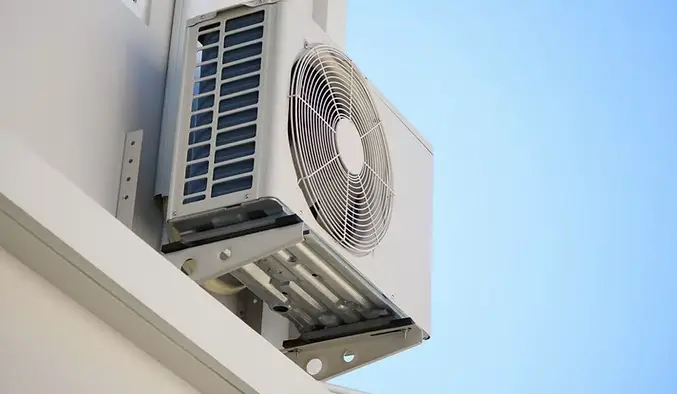
A heat pump usually has two main components located in different areas of your home. The outdoor unit looks similar to an air conditioner condenser and is typically placed on a concrete pad beside the house or mounted on an exterior wall.
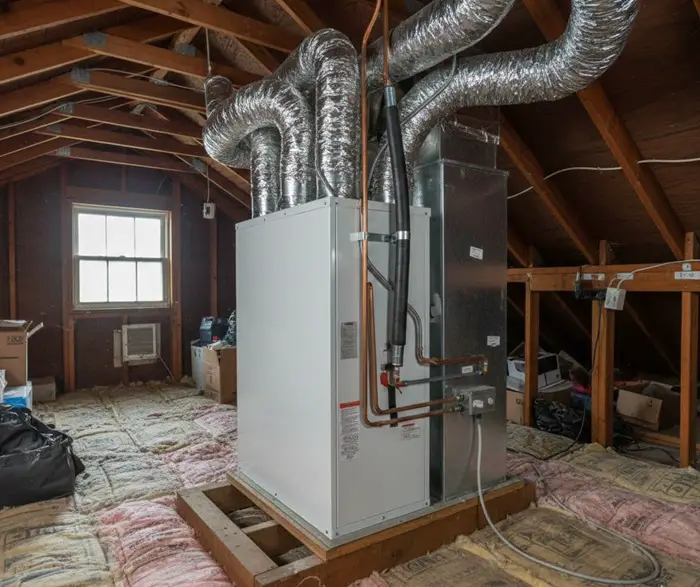
The indoor unit varies by system type: ducted heat pumps use an air handler in the basement, attic, or utility room, while ductless mini-splits have wall-mounted or ceiling-mounted units inside individual rooms. Both work together to heat and cool your home.
Does every house have a heat pump?
No, not every house has a heat pump. Heat pumps are increasingly popular, but many homes still rely on traditional furnaces, boilers, or standard air conditioners. Installation depends on region, climate, budget, and whether the home has ductwork.
Heat pumps are more common in mild to moderate climates and new constructions focused on energy efficiency. Older homes or colder-climate houses may still use fossil-fuel systems unless upgraded. So, while widespread, heat pumps aren’t universal yet.
How do you tell if you have a heat pump in your house?
The easiest way to identify a heat pump is to check your thermostat: if it has “Heat,” “Cool,” and “Emergency Heat” or “Aux Heat”, you likely have a heat pump.
You can also inspect the outdoor unit—if it runs in both summer and winter, it’s almost certainly a heat pump.
Another clue is warm air in winter coming from what looks like a standard AC condenser. HVAC model numbers and manuals will confirm the system type.
Do all heat pumps dehumidify the air? Is dry mode the same as using a dehumidifier?
All heat pumps remove some moisture during cooling because air naturally sheds humidity when passing over the cold evaporator coil. However, they’re not as powerful as dedicated dehumidifiers, especially in very humid climates.
Dry Mode is not the same as using a dehumidifier—it improves moisture removal by slowing the fan and extending coil contact time, but it still relies on cooling cycles. A true dehumidifier extracts far more water consistently and independently of temperature.
Conclusion: Heat Pump and Dehumidifier Combo – Are They Any Good?
If you live in a region with mild to moderate humidity levels, your heat pump may give you all the moisture control you need—especially if you use Dry Mode and optimize your settings. In that case, a heat pump and dehumidifier combo built into a single system might be genuinely beneficial.
However, if your air is consistently muggy, you’re running into mold problems, or you live in a humid coastal or tropical climate, a heat pump alone simply won’t cut it. A dedicated dehumidifier or a whole-home setup will outperform a heat pump every time.
In short, a heat pump can help with dehumidification, but it isn’t a full replacement for a real dehumidifier if humidity is a major issue in your home. It can improve Thermal Comfort—just don’t expect miracles.

Meen Smith is a nurse by profession who loves writing online, spending time with her family and caring for the elderly. She has already worked as an associate editor on various moms, babies, home appliances, kitchen, and healthy living blogs. In her spare time, she also enjoys drawing, reading/writing kindle eBooks and improving her skills a bit.