
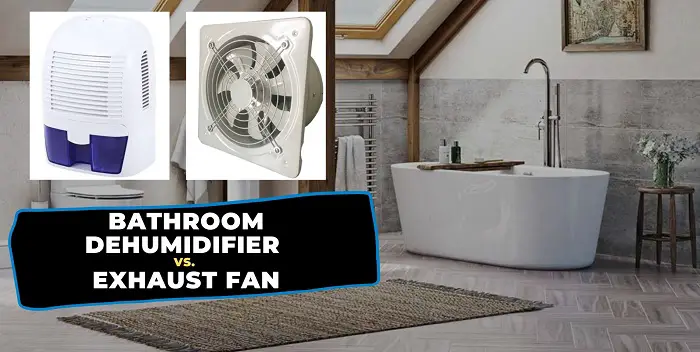
Most bathrooms in our home are equipped with some form of the exhaust system to vent out smells, condensation from the shower, and more.
Since the bathroom is often the worst room for creating condensation in the first place, some think that a good dehumidifier might be the best solution. While most others will use a traditional exhaust fan to pull moist air outside.
Both approaches aim to tackle the same problem—excess humidity that can lead to mold, mildew, and even long-term structural damage if left unchecked.
But what exactly is the best option for your bathroom? Is it a dehumidifier or an exhaust fan? Can you even use a dehumidifier instead of a bathroom fan?
Let’s take a look…
Dehumidifier for Bathroom: Pros and Cons
While it is the best solution for your bathroom, a dehumidifier has pros and cons to consider before you make your final decision, recommendation aside, that is, on what is best for your needs.
Pros:
1- A programmable level: Whether you have a small, rudimentary dehumidifier or a fancy one with plenty of buttons, all of them are designed to lower the humidity of the air to a set level that you can adjust at any time based on your needs or whoever is using the bathroom.
2- Great for humid weather conditions: If you live somewhere where the weather is incredibly humid and uncomfortable, a dehumidifier will be the best choice to clear condensation and draw out extra humidity from the environment out of your air.
3- Have lots of choices for features: Since there are many kinds of dehumidifiers, you can have your pick of options. Some will give you timers. Others will have push reminders to empty them, and others can be connected to your central system to help spread the dehumidified air throughout our entire home.
Cons:
1- Have to clean and empty it regularly: Push notification-enabled or not, even the fanciest dehumidifier will have to be emptied regularly to leave room for more water to be filtered from the air directly into the machine. This can be time-consuming for the scheduler.
2- Takes up space in your bathroom: Since most dehumidifiers are built into the wall (or they are, they’re very high-end), a dehumidifier will take up both space and electrical energy in your bathroom, which is something to consider.
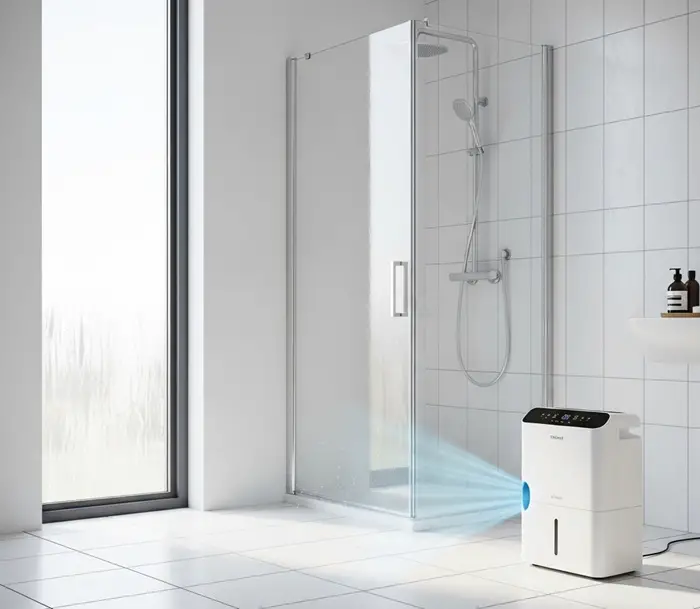
Exhaust Fan for Your Bathroom: Pros and Cons
An exhaust fan is often used in many older homes or apartment units or even in laundromats where there is no space or inclination to put something in place, such as a dehumidifier system. They can be wall-mounted, added to a window, or even inset in the ceiling.
Pros:
1- Can be preinstalled or post-installed: If your home doesn’t have a fan installed before you move into it, you can do it after the fact easily by getting a window system or even a classic tabletop or floor fan. In worst-case scenarios, the minor ductwork for a ceiling or wall-mounted fan is also inexpensive.
2- Require no maintenance: Since there are no computerized parts to a fan, there is no need for cleaning (other than a quick vacuum now and again) or maintenance as far as a system check. A fan is simply a spinning disk, and that simplicity has its perks! They can also be upgraded to a bigger one relatively cheaply.
Cons:
1- Offer no humidity control at all: One of the downfalls of relying on an exhaust fan is that there is no control for humidity. It simply circulates the air around, clearing condensation and general humidity.
2- It can take a while to clear condensation: Pre-installed or not, even the best fans in use in the bathroom can take a while to clear the condensation and damp feeling. This time can be even longer if you have a large bathroom. If time is an issue for you, this is something to consider!
3- Only work in optimal conditions: If you live in cold and humidity-free locations, a fan is excellent. But otherwise, it’ll often not work very effectively against keeping the bathroom clean and comfortable after a shower or bath. Many people end up bringing a dehumidifier into space during the hot and humid months of the year, anyway.
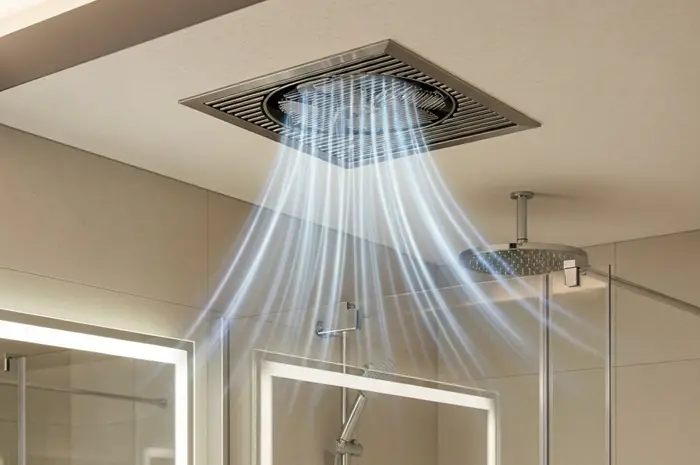
Can a Dehumidifier Be Used Instead of a Bathroom Fan?
A regular portable home dehumidifier isn’t a suitable replacement for a bathroom exhaust fan.
These appliances simply aren’t designed to handle the rapid buildup of moisture that occurs during a shower, and they don’t provide the necessary ventilation to keep your bathroom dry and mold-free.
While a bathroom dehumidifier might eventually remove a similar amount of moisture as a fan, it does so far more slowly. This delay gives moisture time to linger, potentially causing damage to walls, ceilings, or fixtures, and leads to increased energy use every time you run it after a shower.
That said, a portable dehumidifier can still be helpful when used alongside a bathroom fan, especially during periods of heavy use.
For instance, if you have guests and the number of daily showers doubles, a dehumidifier can support your fan in managing the extra steam load more effectively.
If your bathroom doesn’t have an extractor fan at all, don’t worry—there are alternative ways to maintain good ventilation and reduce humidity. This article shares several practical tips for keeping your bathroom dry without a fan, and dehumidifiers can still play a helpful role in combination with other methods.
For more demanding moisture control, like in bathrooms with frequent use, laundry rooms, or crawl spaces, commercial-grade dehumidifiers offer a better solution.
These units can be integrated into HVAC systems, and they come with built-in fans to move air efficiently. They’re built to handle high humidity levels and actively ventilate the air either outside or through your home’s system.
In short, while a portable dehumidifier has its uses, it’s not a stand-in for a proper bathroom ventilation setup.
Setting Up a Dehumidifier in the Bathroom For Best Results
When installing a dehumidifier in your bathroom, no matter the type or model, proper placement is key to ensuring optimal performance.
Most portable dehumidifiers are floor-standing units. While not ideal (since hot, humid air tends to rise), options for elevating them can be limited unless you have a safe, stable surface like a table or stool.
If so, it’s worth positioning the unit a bit higher to help it catch rising moisture more efficiently.
Wherever you place the unit, aim to keep it as close to the main sources of moisture, such as the shower or bathtub, as safely possible. Remember, since these appliances are electrical, placement should always prioritize safety and avoid direct exposure to splashes or excessive steam.
For built-in or wall-mounted bathroom dehumidifiers, placement higher up is generally best. Vents should be installed near the ceiling or high on the wall, ideally close to where steam is generated. A wall-mounted dehumidifier should also be positioned near the ceiling for effective moisture capture.
Regardless of the type—portable, wall-mounted, or integrated into a ventilation system—make sure the dehumidifier has plenty of open space around it. Unobstructed airflow is crucial for the unit to operate efficiently and dry out the room effectively.
Best Small Dehumidifier for Bathroom – What to look Before Buying?
A small dehumidifier is exactly what it sounds like – it’s a device specifically made to fit in smaller rooms and areas like bathroom. But if you’ve never bought a small dehumidifier before, you might not know where to begin.
To make the task easier, here are the best portable home dehumidifiers you can pick from.
1- Pure Enrichment PureDry Mini Dehumidifier
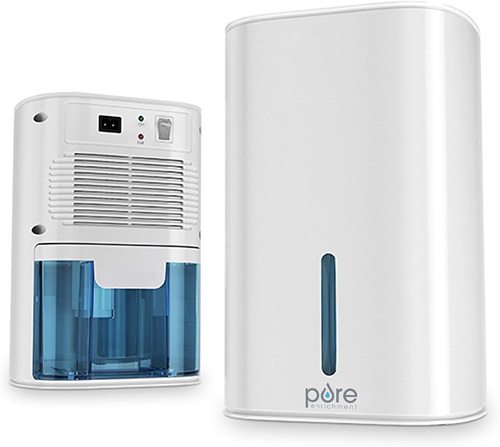
If your closet smells like a forgotten rainforest or your bathroom mirror steams up like a Bollywood dream sequence, the Pure Enrichment PureDry Mini Dehumidifier is your new best friend.
Don’t let its compact size fool you—this tiny powerhouse pulls out up to 300ml of excess moisture a day, all while whispering quietly in the background (seriously, it’s super quiet). With its 27oz water tank, it’s perfect for small spaces like bathrooms, kitchens, boats, or any nook that feels a little… too tropical.
Stylish enough to sit on your shelf and smart enough to auto shut-off when full, it’s basically the moisture ninja your home never knew it needed. No more musty odors, no more damp clothes—just dry, breathable air.
If you’re ready to downsize your humidity without upsizing your electric bill, this little gadget’s a no-brainer. Moisture doesn’t stand a chance.
2- Pohl Schmitt Electric Mini Dehumidifier:
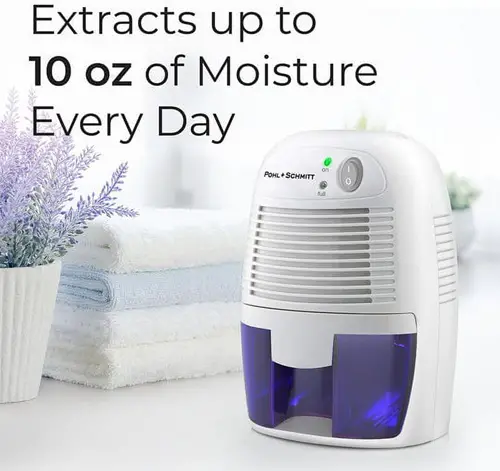
Perfect for spaces up to 225 sq. ft., this compact cutie quietly sips away moisture—up to 10 oz per day—without making a fuss or hogging space.
Whether it’s a damp bathroom, musty closet, or your RV that smells like it’s just returned from a rainforest expedition, this 17 oz capacity Pohl Schmitt wonder gets the job done. Plus, it’s whisper-quiet—so no annoying humming while you sleep, relax, or binge-watch in peace.
Sleek, simple, and energy-efficient, it’s the kind of appliance that does its job without demanding attention. Set it, forget it, and say goodbye to that sticky, clammy feeling. For dry air lovers who want results without the bulk, Pohl Schmitt delivers big comfort in a mini package.
3- Tenergy Sorbi Air Dehumidifier w/Purifying Function
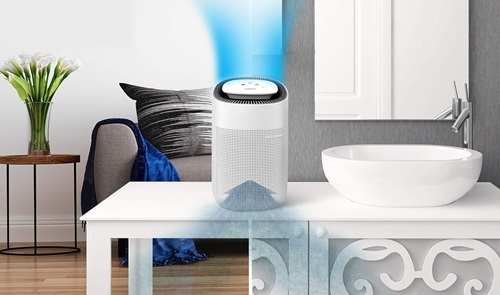
The Tenergy Sorbi isn’t just a dehumidifier—it’s a double agent, quietly tackling humidity and air impurities like a sleek little ninja. With a 1000ml water tank and a True HEPA filter, this smart device doesn’t just dry your space—it cleans it. Say goodbye to musty closets, damp bathrooms, and airborne nonsense.
Touch controls? Check. Adjustable fan speed? Yep. Auto shutoff? Of course. And best of all—it’s whisper-quiet, making it ideal for bedrooms, nurseries, or any place peace is prized.
Compact yet mighty, the Sorbi is perfect for small spaces where clean, dry air matters most. It’s like having a spa day for your room, every day—minus the cucumber slices.
So if you’re tired of moisture drama and dusty air, the Tenergy Sorbi steps up as your sleek, silent, all-in-one solution. Breathe easier. Live drier. Sleep better.
Buying Guide for Beginners
There are many different factors to consider when buying a small dehumidifier—-some obvious, some that wouldn’t have crossed your mind until you’re stuck with the dang thing.
Below are some of the more important ones.
1- User-friendliness.
Some small dehumidifiers come with many handy features, from mobility wheels to timers.
One typical—though not guaranteed—feature is automatic shutoff whenever the moisture tank gets too full, which will help you avoid messy overflows.
That said, while extra features are cool, you don’t wanna get a dehumidifier with a bunch of extra buttons and gizmos you have no idea how to use.
Ideally, setting up a small dehumidifier should be a simple and quick experience that you can do without too much pain.
You’ll be doing it repeatedly, so you don’t want to get discouraged from doing it. Try to balance cool features with user-friendliness, and make sure that whatever brand you end up buying has good manuals and documentation if you need help.
2- Consider the size of the dehumidifier.
You’re looking for something on the smaller side, but what small means exactly may depend on the person.
How much space do you have? Do you want something that can fit in a tight, cramped closet or a gun safe? Or are you working with a kitchen, bathroom, or bedroom with a bit more space?
| Room Size | Example Area | Recommended Capacity | Dehumidifier Type |
|---|---|---|---|
| Up to 250 sq. ft. | Bathroom, closet | 0.5 – 2 liters/day | Mini |
| 250 – 500 sq. ft. | Bedroom, small office | 5 – 8 liters/day | Small |
| 500 – 1,000 sq. ft. | Living room, medium room | 10 – 15 liters/day | Medium/Standard |
| Over 1,000 sq. ft. | Basement, large spaces | 20+ liters/day | Large/High-Capacity |
3- Consider the CFM and ACH of the dehumidifier.
A dehumidifier works in two values: CFM (Cubic Feet per Minute) and ACH (Air Changes per Hour).
CFM tells us the units of air that can only be extracted directly through the unit—-in other words, if the air is going to be dehumidified, it will need to pass directly through the dehumidifier.
The bigger your room, the more CFM you want to look for.
To calculate the CFM, you need the ACH value. ACH tells us the number of times the humid air should be processed through the dehumidifier. This is based on the moisture level of your room; the more humid the room, the more ACH you’ll need.
A room with somewhat damp air—say, 60-70% humidity—should have a dehumidifier with an ACH of 3. Still, if you’re looking to dehumidify a very wet room with standing water, it’s recommended to have an ACH of about 6.
To calculate the CFM you’ll want for your dehumidifier, take the ACH value, and multiply it by the number of cubic feet in your room. Then, divide that value by 60 minutes to get the ideal CFM value of your dehumidifier.
4- Will it be an eye-or-ear-sore?
Do you want something slick and modern or a bit cozy and rustic? Maybe you’d ideally like for no one to notice it at all, or maybe you want it to be flashy and bright.
Your portable dehumidifier device will probably be nearly constantly turned on and put on display, so considering the aesthetic aspects of your device is a good idea. Ideally, the style and pattern you pick should fit the rest of the room.
As for noise, higher-quality models tend to make nearly no noticeable noise, but some may make slight background noise.
If you find yourself sensitive to small noises like that, make sure you read reviews and try the dehumidifier to test the waters so that you don’t find it driving you up the wall when you’re trying to get work done.
That said, while a nice-looking and sounding dehumidifier is ideal, an ugly and loud small dehumidifier is still preferable to mold all over your walls, so don’t waffle too much.
5- How much moisture capacity does the dehumidifier have, and how much power does it use?
Your typical small dehumidifier will hold about 10-15 ounces of water at a time, but there are units capable of carrying far more or far less. We recommend you get a dehumidifier that only requires you to empty the tank about once every 24 hours. You don’t want to constantly be emptying your dehumidifier’s moisture tank every hour.
Also, remember that small dehumidifiers typically use less power than their larger counterparts, but the power they need might depend on the model you buy.
Older, less optimized models may be cheaper, but they may also use more energy than newer models with energy-saving options.
Also, consider what power source you’d want to look for in your dehumidifier. If you have outlets available and accessible, a plug-in dehumidifier might be for you, but if not, consider buying a battery-powered dehumidifier.
Conclusion – What is Better for Your Bathroom Dehumidifier or Exhaust Fan?
As the pro and con list for each option proves, a dehumidifier will be your catch-all solution when you want your bathroom to stay condensation-free and manageable even in humid weather conditions.
Remember, if you continue using your bathroom without removing the excess moisture, sooner or later, you will see molds or mildew growing in various places of your bathroom.
While you may get away with a classic exhaust fan for those less humid places, the one-stop solution will still be a good quality dehumidifier. There are also dehumidifier-and-fan-combo available, but they are difficult to find; if you can get hands-on with them, it will be a much better option.
Whether we like talking about the amount of time we spend in our bathrooms or not, a lot of time is spent there.
If you want that space to be as comfortable and as climate-controlled as possible, you’ll find that a dehumidifier will be the best option for the job, no matter where you live or what time of year it is.

Meen Smith is a nurse by profession who loves writing online, spending time with her family and caring for the elderly. She has already worked as an associate editor on various moms, babies, home appliances, kitchen, and healthy living blogs. In her spare time, she also enjoys drawing, reading/writing kindle eBooks and improving her skills a bit.