
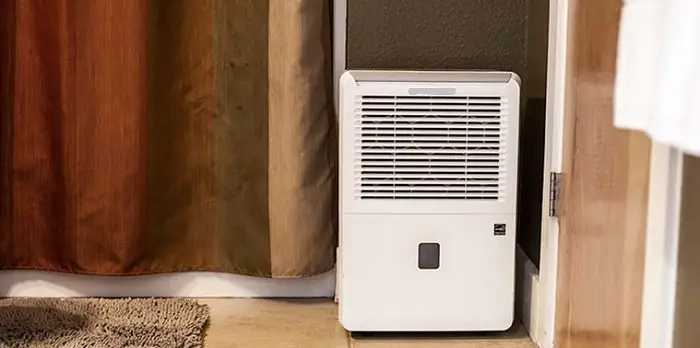
If you’ve ever bought a dehumidifier, you know it feels a bit like adopting a quiet little workhorse for your home—one that never complains but works nonstop to keep your air crisp, comfortable, and mold-free.
But here’s the real question most homeowners eventually ask: How long is this hardworking machine actually supposed to last?
Just like any appliance, a dehumidifier doesn’t live forever. It has a lifespan, quirks, and a few hidden habits that determine whether it retires gracefully after years of loyal service… or gives up during peak monsoon season when you need it the most (we’ve all been there).
In this guide, we’ll break down what “average lifespan” really means, what affects it, and how you can squeeze every extra hour out of your dehumidifier—without treating it like fragile royalty.
Let’s decode the timeline of your moisture-busting companion. Everything you need to know about this helpful device is revealed next!
What is the Average Lifespan of a Dehumidifier?
Many homeowners firstly ask about the lifespan of their dehumidifier device. And it is only reasonable to do so, as you will want to use your dehumidifier as long as possible.
On average, a dehumidifier typically lasts between 5 to 10 years. However, you should know that the average life of a dehumidifier depends on the brand and quality of materials used for the device.
Overall, dehumidifiers were created to run continuously, similar to any other kitchen appliance, like your refrigerator.
When it comes to how long a dehumidifier lasts, you will discover that you will most likely have to change it after only five years. After this period, your device will start breaking, and its efficiency will significantly decrease.
Of course, some dehumidifiers could last longer and may come with a longer life span than average. But you may have to pay extra for them.
Having these all things in mind, let’s take a close look at factors that influence the average lifespan of such a dehumidifier.

Average Lifespan of Different Types of Dehumidifiers
Be aware that not all dehumidifiers age the same way. Some are lightweight helpers designed for short-term or seasonal use, while others are heavy-duty machines engineered to run daily without complaint.
Understanding the lifespan of each type helps you set realistic expectations and choose a model that matches your home’s humidity demands.
Here’s a closer look at how long each category typically lasts—and why.
1. Portable Dehumidifiers
Portable dehumidifiers are the everyday home units most people start with. They’re compact, affordable, and great for bedrooms, living rooms, or moderately damp basements.
However, their lifespan is usually the shortest in the lineup. Because they rely on smaller compressors and lighter components, they can wear out faster—especially in high-humidity environments where they run for long hours every day.
Expect around 3 to 7 years, but with careful maintenance and limited seasonal use, some units can stretch to 8–10 years. Their convenience comes with a trade-off: they simply aren’t built for continuous heavy-duty duty.
2. Whole-House Dehumidifiers
Whole-house dehumidifiers are the marathon runners of the humidity control world. Installed into your HVAC system or designed as standalone ducted units, they’re engineered for long-term, large-scale performance.
Their larger coils, strong compressors, and professional-grade components allow them to manage moisture in the entire home without constant strain.
With proper maintenance—mainly filter cleaning and annual servicing—they typically last 8 to 15 years, with high-end models reaching even longer lifespans. Because they operate in stable indoor environments with better airflow, their wear-and-tear is significantly lower than portable units.
3. Desiccant Dehumidifiers
Desiccant dehumidifiers use a moisture-absorbing material instead of refrigeration, making them ideal for colder climates or unheated spaces like garages, crawl spaces, and RVs.
Unlike compressor-based systems, desiccants don’t struggle in low temperatures and have fewer mechanical parts that can fail. The absorbing wheel and heater elements do wear out eventually, but overall, they’re known for reliability.
Smaller consumer models tend to last 3 to 8 years, while industrial-grade desiccant systems can operate reliably for 10 to 15 years with periodic part replacement. Their longevity largely depends on how consistently they are used and whether the desiccant wheel is maintained properly.
4. Refrigerant Dehumidifiers
Also known as compressor-based dehumidifiers, these are the classic models most homeowners use. They work best in warm, humid climates where their coils can efficiently condense moisture.
Their lifespan depends heavily on operating conditions—running in cold spaces makes them freeze up and strain the compressor.
In ideal conditions and with regular cleaning, they typically last 5 to 10 years. Units used continuously in basements or high-humidity zones tend to fall on the lower end of the range. Refrigerant-based systems require more care because dusty coils, poor airflow, and clogged filters can drastically shorten their life.
5. Commercial Dehumidifier Units
Commercial dehumidifiers are built like tanks—literally made for warehouses, construction sites, flood restoration, and industrial facilities.
They have oversized compressors, robust frames, advanced pumps, and heavy-duty coils designed to withstand relentless daily operation. These units often run 24/7 and still maintain impressive reliability.
Their typical lifespan ranges from 7 to 15 years, with many hitting the upper range when serviced regularly. They’re the most durable category, but also require professional maintenance to keep the pumps, motors, and sensors functioning optimally.
| Type of Dehumidifier | Typical Lifespan | Why It Lasts This Long | Best Use Case |
|---|---|---|---|
| Portable Dehumidifiers | 3–7 years | Light components, not designed for heavy continuous use | Bedrooms, living rooms, small spaces |
| Whole-House Dehumidifiers | 8–15 years | Strong components, stable environment, continuous airflow | Entire home moisture control |
| Desiccant Dehumidifiers | 3–8 years (consumer), 10–15 years (industrial) | Fewer moving parts, efficient in cold climates | Garages, basements, RVs, cold rooms |
| Refrigerant Dehumidifiers | 5–10 years | Compressor wear + coil maintenance required | Warm, humid regions; basements (above 15°C) |
| Commercial Dehumidifier Units | 7–15 years | Heavy-duty construction built for nonstop operation | Warehouses, restoration, industrial sites |

What are the Factors That Impact a Dehumidifier’s Lifespan?
So, you want to use a dehumidifier in your home to improve air quality.
And as we said above, you will want to pay close attention to certain factors so that you extend the life of your device.
Here are the leading factors that directly impact how long some dehumidifiers last longer than many others.
1- Manufacturer
The first thing you need to take into account is the manufacturer or the brand.
If you want to use your dehumidifier more often, you should avoid cheap and unknown brands. These will most likely break down after a couple of months of usage, which in turn will lead to additional expenses.
Thus, a dehumidifier’s lifespan depends greatly on the reputation of the manufacturer and the quality of materials used in its design.
Reliable manufacturers will thoroughly test their products so that they can check the effectiveness of the dehumidifier. Also, such brands will focus on the quality of the engineering process, which can add to the advantages of using a popular brand’s dehumidifiers.
2- Dimensions and placement
Another essential factor you need to consider for expanding your dehumidifier’s lifespan is its dimensions.
As a general rule, small devices used in bigger spaces are overworked, decreasing their ability to cleanse the air.
Also, using the wrong device can significantly reduce its lifespan, making you purchase a new piece of equipment shortly after. The correct usage of a dehumidifier determines how long it will last.
And keep in mind that positioning the dehumidifier device a bit farther from the wall can boost its effectiveness and life.
3- Environment of the home
And in case you didn’t know already, your home’s environment can have a say in the lifespan of your dehumidifier.
If the room is not warm enough or if it is too hot, your dehumidifier might have issues adapting. This will make it overwork, which will impact its ability to perform for a more extended period.
And if your room tends to reach freezing temperatures, you should always use a dehumidifier with a defrost setting. Doing otherwise will only damage your device and prevent it from doing its job.
4- Frequency of use
A dehumidifier used only during monsoon months, or occasionally in high-humidity weather, experiences far less mechanical stress than a unit that works year-round.
Seasonal use allows parts to rest, moisture-sensitive components to dry out, and the electronics to cool down.
On the other hand, if you live in a humid climate where your dehumidifier is practically a permanent member of the family, expect a shorter lifespan.
Constant cycling—starting, stopping, and restarting—also affects compressor longevity, especially in cheaper models with less sophisticated control boards.
5- Cleaning and maintenance
Don’t forget about doing maintenance, either! A dehumidifier will require frequent emptying of the chambers, along with cleaning and filter changes.
Regular maintenance is the secret ingredient that often determines whether a dehumidifier dies young or becomes a decade-long champion.
Dust, lint, and mold can clog the air filter and coils, forcing the machine to work harder and run hotter.
Over time, this reduces efficiency and puts unnecessary stress on the compressor and fan motor. Cleaning the air filter every 2–4 weeks, wiping the coils, and emptying the tank before it overfills help keep the system running smoothly.
Neglected maintenance is one of the top reasons dehumidifiers fail early—many units that “stop working” are actually victims of dust buildup, dirty coils, or blocked airflow that could easily have been prevented.
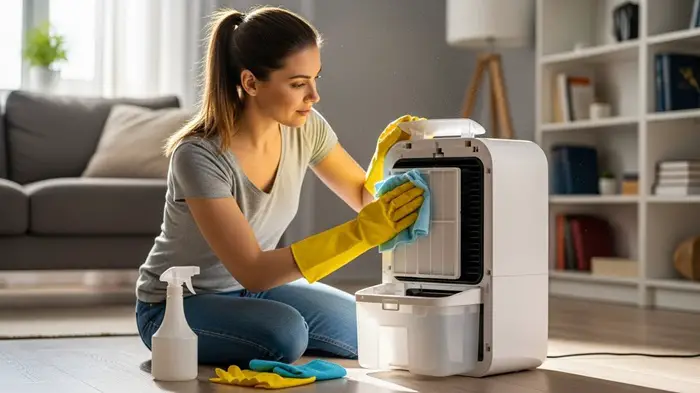
Maintenance Schedule and Tips for Maximum Lifespan of Your Dehumidifier
A dehumidifier can last three years… or fifteen. The difference usually isn’t luck—it’s maintenance.
A well-maintained dehumidifier runs cooler, works more efficiently, and avoids the silent killers: dust buildup, clogged filters, poor airflow, and overworked compressors.
Below is a practical maintenance schedule broken down into quick, manageable tasks that keep your unit healthy for the long haul.
Weekly Tasks
- Clean or Check the Air Filter – A dirty filter restricts airflow, forcing the compressor and fan to run hotter. A simple rinse or wipe is often enough to keep performance optimal.
- Empty and Clean the Water Tank – Stagnant water becomes a breeding ground for mold and bacterial biofilm. Rinse the tank with mild soap once a week to keep things fresh.
- Quick Exterior Wipe – Dust on the vents can sneak inside the machine. A quick wipe ensures the air pathway stays clear.
Monthly Tasks
- Deep-Clean the Filter – Even if you rinse it weekly, a more thorough cleaning once a month ensures no lint, pet hair, or fine dust remains.
- Inspect the Coils – Look for dust, pet dander, or frost buildup. Clean with a soft brush or vacuum (no bending the fins!).
- Check Drain Hose (if using continuous drainage) – Ensure there are no kinks, clogs, or mold buildup in the hose. Flush it with warm water if needed.
Quarterly Tasks
- Clean Internal Components – Remove the outer casing and gently vacuum the interior to clear fine dust. Better airflow = longer compressor life.
- Inspect the Humidity Sensor – If readings seem off, clean the sensor area carefully or recalibrate it if your unit allows.
- Lubricate Fan Bearings (for older models) – Some fans need lubrication to maintain smooth rotation. Check your manual before adding any oils.
Annual Tasks
- Professional Servicing – Just like an AC, a dehumidifier benefits from an annual check. A technician can test refrigerant levels, compressor health, and electrical connections.
- Coil Wash & Deep Cleaning – A proper coil cleaning removes stubborn buildup that basic brushing can’t tackle.
- Check the Seals and Housing – Over time, plastic warps and seals loosen. Inspect and tighten any loose screws, clips, or connections.
Seasonal Storage Tips When Not in Use
If you store your dehumidifier during winter or monsoon transitions:
- Drain all water and let the tank air dry fully to prevent mold.
- Run the fan-only mode (if available) for 30 minutes to dry internal coils.
- Wrap in a breathable cover—avoid airtight plastic, which traps moisture.
- Store upright to protect the compressor oil from shifting.
- Keep it in a cool, dry place—attics and damp basements are not ideal.
Proper storage alone can add 1–2 years of life to a portable dehumidifier.

Do Future Technology and Longevity Trends Improve a Dehumidifier’s Lifespan?
As dehumidifiers continue to evolve, modern technology is quietly transforming how long these machines last and how efficiently they operate.
From smarter compressors to self-diagnosing electronics, the latest innovations in smart dehumidifiers are not just about convenience—they’re about durability.
Here’s how future-forward features are shaping the next generation of long-lasting dehumidifiers.
Inverter Technology
Inverter-driven dehumidifiers are becoming increasingly popular because they operate with far less mechanical stress than traditional on/off compressor systems.
Instead of constantly stopping and restarting, the inverter compressor adjusts its speed based on humidity levels, allowing smoother, more consistent operation.
This reduces heat buildup, cuts down on wear and tear, and prevents the heavy strain caused by frequent cycling.
The result is a quieter machine that typically lasts several years longer, consumes less energy, and maintains more stable performance—especially in homes where the unit runs for long hours every day.
Smart Diagnostics
Smart diagnostics are another major leap forward in dehumidifier longevity. Newer models include sensors and microchips that constantly monitor the unit’s health—from humidity accuracy to coil temperature to airflow.
When something starts to go wrong, the system alerts the user before a minor issue turns into a major breakdown. Error codes, app notifications, and predictive maintenance features make troubleshooting faster and more accurate.
This early detection not only prevents expensive components from burning out but also helps owners address airflow blockages, dirty filters, or sensor malfunctions long before they impact the compressor or fan motor.
Advancements in materials
Improved materials and quality advancements are also increasing how long dehumidifiers can survive demanding environments.
Many modern units now use corrosion-resistant coils, durable polymer housings, reinforced drain systems, and moisture-protected circuit boards.
These upgrades reduce the risk of rust, electrical shorting, and physical degradation—three of the most common causes of early failure in older models.
Even the fans and motors have seen improvements, with higher-quality bearings designed to tolerate continuous operation.
Together, these enhanced materials create a more resilient machine that can hold up better against humidity, dust, and long operating hours.
A Few Warning Signs Your Dehumidifier Unit Needs a Replacement Rather Than Repair
Keep in mind that even the best-maintained dehumidifier has an expiration date.
While some issues can be fixed with a simple cleaning or part replacement, others signal that your unit is reaching the end of its lifespan.
Here are the key red flags that indicate it’s smarter — and more cost-effective — to replace your dehumidifier rather than repair it.
1. It’s no longer removing moisture effectively
If your dehumidifier runs for hours but the humidity barely drops, or the tank stays mysteriously empty, it’s a sign that the compressor or coils are failing.
Once the core moisture-removal components lose efficiency, repairs often cost nearly as much as a new machine.
2. The compressor runs hot or makes unusual noises
A healthy compressor hums softly. Loud clicking, grinding, rattling, or buzzing sounds indicate mechanical wear or internal damage.
Overheating is even worse—it means the unit is straining to operate. Compressor repairs are typically expensive and rarely worth it on older units.
3. Persistent Frost or Ice Buildup on the Coils
Occasional frost is normal in colder rooms, but constant ice formation means the refrigerant level is low or the coils are deteriorating.
Fixing this involves refrigerant work or coil replacement, which is often impractical in portable models.
4. Frequent auto-shutoffs or error codes
If the unit keeps shutting down, flashing unfamiliar codes, or refusing to start, the internal electronics may be failing.
Control board repairs can be unpredictable and costly—especially if the model is outdated or parts are unavailable.
5. It’s over 7–10 years old
Most portable dehumidifiers are not designed to last beyond a decade.
If your machine is past its expected lifespan and showing performance issues, replacement is the safer long-term choice. Newer models are more energy-efficient and often quieter.
6. Burnt smell, electrical issues, or tripped breakers
Any burning odor, melted plastic smell, or repeated breaker trips indicate potential electrical failure. This is not repair-worthy—it’s a safety hazard.
Unplug the unit immediately and replace it.
7. Repair costs exceed half the price of a new unit
As a rule of thumb, if fixing the problem costs more than 50% of what a new dehumidifier would cost, upgrading is the better investment.
Modern units offer advanced features and better energy efficiency.
The Conclusion
A well-chosen and well-maintained dehumidifier can serve you faithfully for years, but understanding its lifespan—and the factors that shape it—helps you make smarter decisions along the way.
From choosing the right type of unit to following a simple maintenance routine, every small step adds up to a machine that runs smoother, lasts longer, and protects your home more effectively.
And with modern advancements like inverter compressors, smart diagnostics, and stronger materials, the next generation of dehumidifiers promises even better reliability.
In the end, knowing when to maintain, when to repair, and when to replace ensures you always have a dependable partner keeping humidity under control.

Meen Smith is a nurse by profession who loves writing online, spending time with her family and caring for the elderly. She has already worked as an associate editor on various moms, babies, home appliances, kitchen, and healthy living blogs. In her spare time, she also enjoys drawing, reading/writing kindle eBooks and improving her skills a bit.